Water-based cosmetics can look clean, smell fresh, and still support microbial growth. A damp fingertip entering a jar can introduce organisms, while water and nutrients may help them persist. This makes preservation a performance question, not a marketing label. In practical terms, why are some natural preservatives less effective in water-based cosmetics? Their activity can depend on pH, concentration, solubility, and interactions with other ingredients. A botanical extract that performs well in one formula may offer limited protection in another.
Professional guidance treats preservation as something to test in the finished product. ISO 11930:2019 describes challenge testing for evaluating antimicrobial protection in cosmetics. Cosmetics Europe’s Guidelines on Microbiological Quality of the Finished Cosmetic Product also emphasize assessing product-specific microbiological risk. These references do not establish that every naturally derived system will fail; they show why assumptions are not enough. A formula’s packaging, manufacturing hygiene, and intended use also matter. A pump bottle and an open-mouth jar do not create the same exposure conditions.
The evidence can be humbling. “Natural” does not automatically mean safer, gentler, or broadly antimicrobial. Nor does a passing laboratory result guarantee flawless handling after opening. Formulators need to verify the complete formula through appropriate testing, then review results when ingredients or packaging change. That takes work. It is also the more credible basis for explaining preservation choices to consumers.
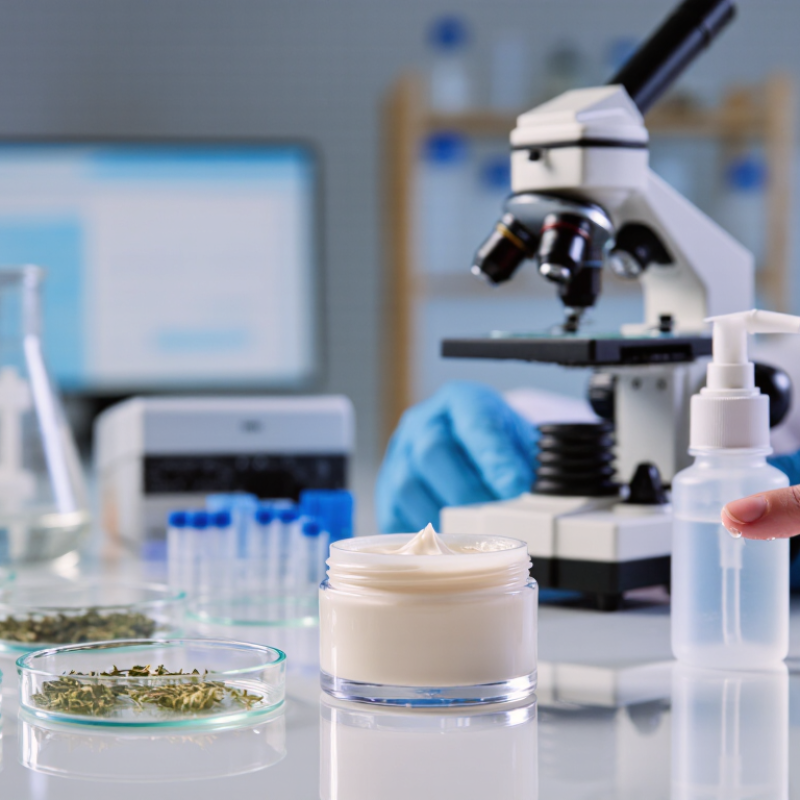
Water-based cosmetics create a welcoming environment for microbes because available water supports their growth. A lotion may look smooth and clean while tiny amounts of bacteria, yeast, or mold enter through ingredients, equipment, or repeated finger contact. Some botanical extracts also bring sugars and other nutrients that microbes can use. Small details matter.
Natural preservatives are not automatically ineffective, but their performance depends on the whole formula. A preservative may work only within a certain pH range, or become less available when it binds to oils, gums, or other ingredients. Uneven mixing can leave parts of a product less protected. A jar used beside a damp sink faces more repeated exposure than a sealed pump bottle. A clean-looking cream proves little.
Formulators assess these risks with preservation efficacy testing, not appearance alone. Testing should reflect the finished product, its packaging, and expected use. Yet results are not a lifetime guarantee; storage and handling can still change the picture. It is tempting to treat “natural” as a safety shortcut. That assumption deserves a closer look.
Natural preservatives control microorganisms through several modest mechanisms. Some organic acids make the formula less hospitable to bacteria and yeast, especially when the pH keeps enough acid in its active form. Other plant-derived ingredients may disrupt microbial membranes or slow growth. Their effects depend on concentration, solubility, and the microbes present. “Natural” does not mean universally protective.
Water changes the challenge. Microbes can move and multiply in the water phase, while oils, gums, and plant extracts may bind or dilute preservative ingredients. A jar opened with wet fingers adds another risk. Some ingredients also lose effectiveness as a formula’s pH shifts during storage. Small details matter.
A formulator should assess the complete formula, not rely on one attractive ingredient. That means checking pH, packaging, and compatibility, then using a suitable preservation efficacy test. A clear-looking cream is not proof of control. Nor is a pleasant herbal scent. I have to admit, “natural” can sound reassuring before the evidence is in. When a preservative system struggles, adjusting its level alone may not solve the problem; the formula itself may need a rethink.
| Preservative approach | How it can control microorganisms | Why protection may fail | Key formulation considerations | How to verify performance |
|---|---|---|---|---|
| Organic acids and their salts Examples include benzoic, sorbic, and dehydroacetic acid systems. |
In suitable conditions, the undissociated acid can enter microbial cells and disrupt internal pH balance and essential cellular processes. | Activity is strongly affected by pH. As pH rises, a greater proportion of many weak acids becomes ionized and may be less effective. Some bacteria can also be harder to control than yeasts and molds. | Check the finished product’s pH, not just the ingredient solution. Confirm that the chosen acid system is permitted for the product and intended market, and that it remains compatible with the formula. | Test the finished formula using an appropriate antimicrobial efficacy or preservative challenge test; do not infer protection from the ingredient list alone. |
| Essential oils and aromatic plant components Examples include terpene-rich oils and selected isolated constituents. |
Some components can interfere with microbial membranes and other cellular functions under laboratory conditions. | Oil components may have limited water solubility, evaporate, oxidize, or partition into the oil phase. The amount that remains available in the water phase may be insufficient, and fragrance-level use is not proof of preservation. | Assess solubilization, oxidation stability, packaging compatibility, odor, and skin tolerance. Avoid assuming that one essential oil will protect every formula or control every organism. | Evaluate the complete, packaged product through microbial challenge testing and stability testing. |
| Ferments and fermentation-derived ingredients Examples include certain ferment filtrates and organic-acid-containing materials. |
Depending on the specific material, antimicrobial effects may come from acids or other metabolites produced during fermentation. | Composition and activity can vary by organism, process, raw material, and batch. A ferment ingredient may provide conditioning or other benefits without supplying reliable broad-spectrum preservation. | Review supplier specifications and batch controls. Consider the ingredient’s contribution to the overall preservation system, rather than treating “fermented” as a guarantee of antimicrobial protection. | Challenge-test the finished formula and confirm consistent performance across representative batches. |
| Plant extracts Examples include extracts rich in polyphenols or other plant compounds. |
Some extracts show antimicrobial activity in specific laboratory tests, while others mainly contribute color, scent, or antioxidant properties. | Laboratory activity may not translate to a finished emulsion. Extract composition, concentration, solubility, and interactions with other ingredients can limit the available antimicrobial effect. | Distinguish antioxidant claims from preservative performance. Check extract standardization, solubility, and compatibility with the formula’s pH and other ingredients. | Use finished-product microbial testing to establish whether the extract contributes meaningfully to protection. |
| Preservation boosters and multifunctional ingredients Some ingredients can support, but may not independently provide, preservation. |
Depending on the ingredient, support may include reducing water availability, improving preservative distribution, or making conditions less favorable for microbial growth. | A booster may not control the full range of relevant bacteria, yeasts, and molds on its own. Its effect depends on concentration and the surrounding formula. | Use only at appropriate, permitted levels. Consider the complete system, including pH, water content, packaging, and interactions with surfactants, proteins, and other raw materials. | Confirm the whole preservation system with a challenge test; individual ingredient data cannot predict the finished product’s result reliably. |
| High-water formulas and product use Relevant to lotions, gels, toners, and other water-containing products. |
Preservation systems can inhibit or reduce microbial growth when the active ingredients are available at effective levels throughout the product. | Water provides an environment in which many microorganisms can grow. Raw materials, manufacturing, repeated consumer contact, and inadequate packaging can introduce contamination or increase exposure. | Use hygienic manufacturing, suitable raw-material controls, and packaging that limits contamination where appropriate. Low-water-activity formulas may reduce growth potential, but water activity must be measured and does not replace product-specific assessment. | Assess manufacturing hygiene and packaging alongside preservative efficacy. Reassess when the formula, process, container, or intended use changes. |
| Finished-product verification Applies to every “natural” or conventional preservation approach. |
Testing evaluates how the complete product responds to selected challenge microorganisms under a defined method. | Ingredient reputation, supplier data, or a single laboratory result on a raw material cannot demonstrate that the finished cosmetic is adequately protected. | Choose a method and acceptance criteria appropriate to the product and applicable requirements. ISO 11930 is an established method for evaluating the antimicrobial protection of cosmetic products. | Conduct a suitable preservative efficacy test on the finished formula, supported by microbiological quality controls and stability assessment. |
Why Formulation Conditions Can Weaken Preservative Performance
Water creates a friendly environment for microbial growth, but a preservative’s name alone cannot predict protection. In a water-based lotion, droplets of oil, thickener networks, and dissolved salts can change how much preservative remains available in the water phase. A formula’s pH matters too: some organic acids work best when the product stays sufficiently acidic. Add a botanical extract or change the emulsifier, and performance may shift. Small changes count.
ISO 11930:2019 offers a practical benchmark for testing antimicrobial protection in cosmetics. Under Criterion A, the standard calls for at least a 3-log reduction in bacteria by day 7, alongside specified reductions for yeast and mold. These are challenge-test targets, not proof that every batch will behave identically. Testing the finished formula matters. A preservative may perform well in a supplier’s test mixture yet struggle in a cream with different pH, packaging, or raw materials. That gap is easy to underestimate.
Tips: Check pH after the formula has equilibrated, not just during mixing. Challenge-test the finished product, then retest after meaningful formula changes. Record temperature, mixing order, and packaging; those details can explain a surprising result. A clear-looking jar is not evidence of microbial safety.
Natural preservatives can help control microbial growth, but packaging and daily habits affect how much protection a water-based cosmetic needs. Every opening can expose a product to air, hands, and nearby surfaces. A wide-mouth jar adds another route: damp fingers may carry water or microbes back into the formula. Small details matter.
A pump can reduce direct contact, though it is not a guarantee. A blocked nozzle, a cap left off, or product pushed back into the container can still create problems. Airless packaging may limit repeated exposure, but its performance depends on the design and how the package is used. It is tempting to treat packaging as a final fix. That assumption deserves a second look.
Use conditions matter, too. A jar kept beside a steamy shower faces repeated warmth and moisture, while a product carried in a gym bag may encounter heat and rough handling. Consumers may also add water to loosen a thickening product, changing its preservation balance. That is hard to prevent completely. Formulators should assess the finished product in its intended package, using appropriate microbial challenge testing and stability studies. Clear directions—such as keeping the cap closed and using clean, dry hands—can reduce avoidable contamination. Even then, no package can make careless use harmless.
A water-based lotion may look and smell unchanged while microbes multiply inside it. Natural-origin ingredients can also lose effectiveness when the formula’s pH shifts, or when other ingredients reduce the amount of preservative available in the water phase. A jar opened with wet fingers adds another challenge. Appearance alone cannot reveal these failures.
That is why preservation testing matters. ISO 11930:2019 defines a quantitative challenge test for cosmetic products. Under its Criterion A, bacteria must decrease by at least 3 log units by day 7. Candida albicans must decrease by at least 1 log by day 7. Aspergillus brasiliensis has a 1-log target by day 14. Counts must not rebound through day 28. These are demanding, measurable targets—not a guess based on ingredient lists.
A passing result is useful, but not a promise. The test examines a prepared sample under controlled conditions; it cannot perfectly reproduce every bathroom shelf or repeated use. Test the finished formula, not just the preservative blend. Check pH and repeat testing after meaningful formula or packaging changes. One uncomfortable question remains: if a formula passes only under narrow conditions, is its preservation system robust enough?
Available water helps bacteria, yeast, and mold grow. Some botanical extracts also provide nutrients.
No. Appearance cannot reveal tiny amounts of microbes.
Not always. Their performance depends on the full formula, including pH and other ingredients.
Some preservatives work best within a particular pH range. Check pH after the formula has settled.
Pumps can limit direct finger contact, but blocked nozzles and open caps still matter. Not foolproof.
Damp fingers, open lids, and adding water can affect a product. Keep hands clean and dry.
Ingredients, packaging, and mixing can change protection. A clear jar proves little.
Assess the product in its intended package, and record temperature and handling. Results are not a lifetime guarantee.
Water-based cosmetics provide an environment where bacteria, yeasts, and molds can grow, especially when products contain water-rich ingredients and are repeatedly exposed to air, fingers, or damp surroundings. Natural preservatives can help control these microorganisms, but their effectiveness depends on the formula and how the product is used. This is why are some natural preservatives less effective in water-based cosmetics: they may work only within a particular pH range, dissolve poorly, or become less available when they interact with other ingredients.
Formulation conditions such as pH, ingredient compatibility, and the balance of water and oils can weaken preservation. Packaging that allows frequent contact with hands or air, along with everyday use, can increase contamination risk. Preservation testing helps reveal whether a product’s complete formula can withstand microbial challenges, identify weak points, and guide improvements to the formulation or packaging.

Diaries Biotech