2026 Best Ways to Improve Solubility in Functional Drinks?

Time:2026-11-27 Author:Charlotte
0%

In 2026, functional drinks are expected to deliver useful ingredients without leaving grit, sediment, or an unpleasant aftertaste. That can be harder than it sounds. A mineral may dissolve readily in water, while a botanical extract or fat-soluble vitamin may cloud the same formula. Even a promising blend can change after heating, storage, or a shift in acidity.

Solubility is only part of the picture. A drink can look uniform yet lose stability over time, so formulators also consider dispersion, pH, ingredient interactions, and processing conditions. The practical question is how to improve the solubility of active ingredients in functional drinks. Taste and stability still matter. This article explores practical options, including ingredient selection, particle-size reduction, emulsification, encapsulation, and careful adjustment of pH. Each approach has trade-offs: an emulsifier may improve appearance but affect flavor or label preferences, while finer particles do not always solve long-term settling. Small bench tests, followed by stability checks under realistic storage conditions, can reveal problems before a product reaches consumers. A clear glass on day one is not enough. There is no universal fix, and results depend on the ingredient, dose, and drink base. Some choices deserve a second look. The goal is a formulation that performs consistently, tastes acceptable, and can be supported by reliable testing—not just one that looks impressive in a sample cup.
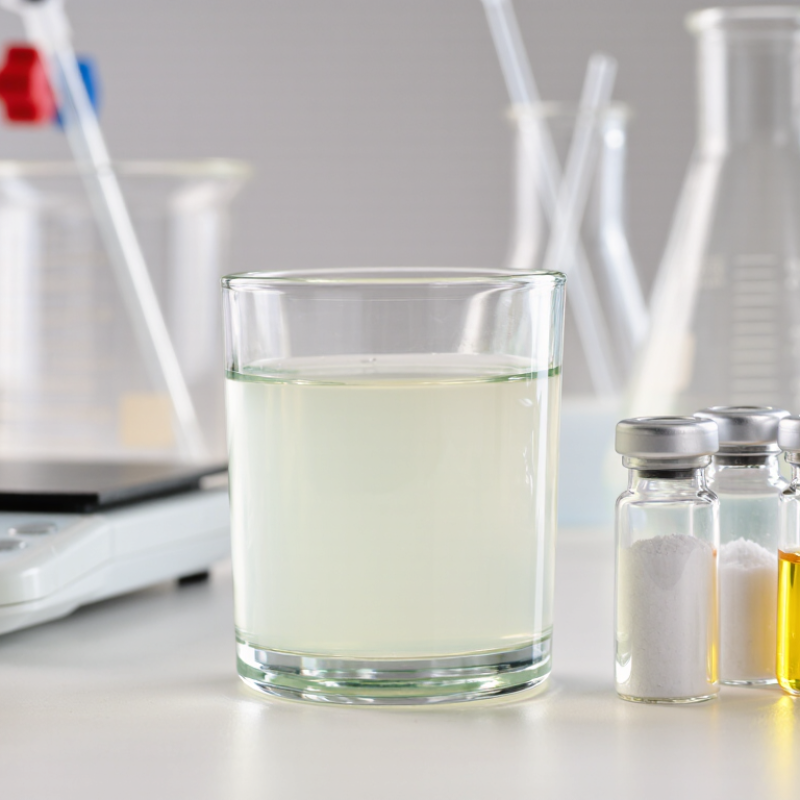
2026 Best Ways to Improve Solubility in Functional Drinks?

Understanding Solubility Challenges in Functional Drinks

2026 Best Ways to Improve Solubility in Functional Drinks?
Understanding Solubility Challenges in Functional Drinks

Grand View Research valued the global functional drinks market at USD 128.66 billion in 2024, forecasting 8.6% annual growth through 2030. That scale makes formulation consistency commercially important. Yet solubility problems often begin in a small beaker: a mineral salt clouds the liquid, botanical extracts leave a ring, or powder settles before the first sip. A clear sample is not proof. It may turn hazy after chilling or weeks of storage.

Different ingredients behave differently. PubChem reports caffeine solubility in water at about 21.7 mg/mL at 25°C. That figure does not guarantee the same performance in an acidic, mineral-rich drink. pH, temperature, dissolved salts, and ingredient interactions can all shift the result. Small changes matter. A formula that works in purified water may fail in hard water or after adding citrus acids.

Useful tests should mirror real conditions. Measure pH, record water hardness, and add ingredients in a controlled order. Check samples after mixing, refrigeration, and storage; watch for sediment, crystals, and surface haze. A finer powder may hydrate faster, but it cannot fix every incompatibility. Teams sometimes rely too much on a single clear sample. That is an easy mistake. Grand View Research, Functional Drinks Market Size Report, 2024; PubChem, Caffeine Compound Summary.

Choosing Ingredients Based on Their Solubility Properties

Choosing Ingredients Based on Their Solubility Properties

A functional drink can look smooth in the mixing tank and still form sediment after chilling. Choose ingredients for the finished drink’s pH, temperature, and mineral content—not just their label claims. Protein powders vary: some disperse readily but remain cloudy, while others clump in acidic liquids. Soluble fibers can add body, yet high use levels may make a drink unpleasantly thick. Small details matter. Test each ingredient at the intended serving concentration and after realistic storage.

Consumer demand makes these choices practical, not merely technical. The International Food Information Council’s 2024 Food & Health Survey reported that 71% of Americans were trying to consume protein. That figure supports protein’s relevance, but it does not guarantee that every protein suits a clear or low-viscosity beverage. Check supplier solubility data, then test the actual formula. Acidity, calcium, and heat can change performance. A bench sample is useful; it is not the whole shelf-life story.

Tips: Add powders gradually under steady agitation, then check for grit, foam, and sediment after refrigeration. Test at the drink’s real pH and mineral level. For cloudy drinks, choose ingredients designed for dispersion; for clear drinks, confirm clarity in the final formula. Not always easy. Recheck after storage, because a fresh blend can still separate.

Using Formulation Techniques to Improve Ingredient Dispersion

2026 Best Ways to Improve Solubility in Functional Drinks?

Using Formulation Techniques to Improve Ingredient Dispersion

A drink can look uniform yet contain fine particles that settle later. Solubility and dispersion are different challenges: some ingredients dissolve, while others remain suspended. Start by identifying which behavior your ingredient needs. Check its particle size, surface properties, and response to water before changing the recipe. For powders that resist wetting, gradual addition can reduce floating clumps. Keep powder dry until mixing.

Pre-wetting a powder with a compatible liquid can help water reach its surface more evenly. Add ingredients in a controlled order, allowing each to disperse before introducing the next. A rotor-stator mixer may break up agglomerates, but more shear is not always better. Excessive mixing can add foam or heat. Test it cold. Compare samples after mixing and after standing, not just in the first minute.

pH and mineral salts can alter how proteins, fibers, and other ingredients behave. Small adjustments may improve stability, though one ingredient can affect another in unexpected ways. I would not assume a clearer sample is automatically better; texture and taste matter too. Check samples at the intended storage temperature, and record sediment, mouthfeel, and mixing time. A simple bench test is useful, but it cannot fully predict production-scale results.

Applying Processing Methods to Enhance Solubility

Improving solubility in functional drinks starts with distinguishing true dissolution from simple dispersion. A powder may look smooth in a shaker yet settle after ten minutes. Finer particles can dissolve faster, but excessive milling may create dust and stubborn clumps. Wetting the powder before adding the full liquid volume often helps. A small amount of water or syrup can form a smooth paste. High-shear mixing can break up agglomerates, though it cannot make every insoluble fiber dissolve. That difference matters.

Processing conditions should match the ingredient. Warm water may help dissolve some proteins or soluble fibers, but heat can dull flavors or damage sensitive nutrients. Add powders gradually while mixing, rather than tipping them into a full tank at once. For difficult blends, controlled homogenization can improve consistency, but excessive pressure may affect texture. Test pH and mineral levels too; they can change how proteins behave. Bench trials are useful: compare settling, visible particles, and mouthfeel after mixing and storage. I would not rely on a single clear-looking sample. Check it again the next day, when the sediment may tell a different story.

2026 Best Ways to Improve Solubility in Functional Drinks? - Applying Processing Methods to Enhance Solubility

Processing method How it can help Suitable ingredients or applications Key processing considerations Limitations and checks
pH adjustment Changes the ionization of acids, bases, and some proteins, which can increase the aqueous solubility of certain ingredients. pH-sensitive minerals, organic acids, and selected protein ingredients. Set the target pH in small trials; check taste, buffering capacity, and compatibility with the rest of the formula. Not suitable for every ingredient. A pH change can affect flavor, protein stability, color, and preservative performance.
Controlled temperature and mixing Heat can increase the dissolution rate and, for some solids, their solubility. Agitation improves wetting and reduces local concentration differences during addition. Ingredients whose solubility or dissolution rate improves at higher temperatures, including some sugars and soluble powders. Add powders gradually into a well-mixed liquid; control temperature, mixing time, and cooling conditions. Heat-sensitive vitamins, flavors, and bioactive compounds may degrade. Some ingredients can crystallize or precipitate again during cooling or storage.
Particle-size reduction Milling or micronization increases surface area, which can speed up wetting and dissolution. It may also improve the uniformity of a dispersion. Poorly dispersing botanical powders, minerals, and other solid ingredients. Control particle size and dust; ensure the powder is wetted properly and added under suitable agitation. Smaller particles do not necessarily increase a substance’s equilibrium solubility. They may still settle, agglomerate, or create a gritty mouthfeel.
High-pressure homogenization Reduces droplet or particle size and can improve dispersion stability and texture in suitable formulations. Oil-containing functional drinks, emulsions, and beverages with dispersed insoluble components. Optimize pressure, number of passes, product temperature, and ingredient order for the specific formulation. It generally improves dispersion rather than true molecular solubility. Check heat generation, oxidation risk, and stability over shelf life.
Ultrasound-assisted processing Cavitation can improve mixing, wetting, and mass transfer, helping some ingredients disperse or dissolve more quickly. Small-batch trials involving botanical extracts, poorly wetted powders, or other challenging dispersions. Validate equipment geometry, treatment time, energy input, and temperature rise at the intended production scale. Results depend strongly on the ingredient and equipment. Excessive treatment may cause heating or degrade sensitive compounds; it does not guarantee higher equilibrium solubility.
Complexation with cyclodextrins Cyclodextrins can form inclusion complexes with some poorly water-soluble molecules, improving their apparent aqueous solubility or dispersibility. Selected hydrophobic flavors and bioactive compounds that can fit and interact with the cyclodextrin cavity. Screen the ingredient-to-cyclodextrin ratio, preparation method, clarity, sensory impact, and applicable food-use requirements. Complex formation is ingredient-specific and may affect flavor release. Confirm regulatory suitability for the product and market.
Emulsification Distributes oil-soluble ingredients as small droplets in the water phase, creating a stable or semi-stable beverage system. Fat-soluble vitamins, carotenoids, essential oils, and other oil-soluble functional ingredients. Select an appropriate food-grade emulsifier and homogenization process; evaluate droplet size and storage stability. An emulsion is a dispersion, not a true solution. Formulations may show creaming, coalescence, flavor changes, or sensitivity to pH and minerals.
Ingredient form and pre-dissolution Using a more soluble salt, extract, or carrier system—or dissolving an ingredient in a compatible premix before blending—can reduce processing difficulties. Minerals, acids, sweeteners, and concentrated functional ingredients available in multiple food-grade forms. Compare ingredient forms for solubility, taste, nutrient contribution, and compatibility; add concentrated premixes in a controlled sequence. Ingredient substitutions can change flavor, pH, nutrition labeling, and cost. Verify the final product rather than relying only on supplier specifications.

Formulation note: Solubility and dispersion depend on ingredient identity, concentration, pH, temperature, and the complete beverage matrix. Confirm clarity or suspension quality, sensory properties, and stability through appropriate product testing.

Testing Solubility, Stability, and Drink Quality

A clear drink on mixing day may not stay clear by morning. Test solubility in the actual drink base, not just in water. Acidity, minerals, sweeteners, and temperature can change how an ingredient disperses. Keep the formula, serving size, and mixing method consistent across samples. Record the water temperature and mixing time. Small differences matter.

Look closely. A smooth-looking sample can still form fine sediment after standing. Check it immediately, after several hours, and again the next day. Note cloudiness, particles, color shifts, and any ring on the glass. For longer storage, use a planned schedule and suitable food-safety procedures. Stability results depend on the package and storage conditions. One test is not enough.

Drink quality is more than appearance. Taste samples at the same temperature, and note grittiness, bitterness, aroma, and how easily the drink pours. A simple rating sheet helps people compare samples without relying on memory. Change one variable at a time, such as mixing order or ingredient level. That takes longer. It also makes results easier to interpret. If a sample looks better but tastes chalky, the improvement may not be useful. Recheck promising changes in a fresh batch; small-scale results do not always repeat perfectly.

FAQS

Why can a drink look smooth but develop sediment later?

Fine particles may stay suspended briefly, then settle during chilling or storage. Check the drink again the next day.

Do all protein powders work in acidic drinks?

No. Acidity, calcium, and heat can affect how proteins disperse. Test the actual formula at its intended pH.

How can I reduce clumps when adding powder?

Add powder gradually under steady mixing. Pre-wetting it with a little compatible liquid may help. Keep the powder dry beforehand.

Is stronger mixing always better?

No. High shear can break up clumps, but it may also add foam or heat. More is not always better.

What is the difference between solubility and dispersion?

A dissolved ingredient mixes into the liquid; a dispersed ingredient may remain as suspended particles. Some fibers will not fully dissolve.

Can warm water improve ingredient solubility?

It may help with some proteins or soluble fibers. Heat can also dull flavors or affect sensitive nutrients, so compare samples.

How should I test a new formula?

Use the intended serving concentration, pH, and mineral level. Record grit, sediment, mouthfeel, and mixing time after refrigeration.

Does a clear sample prove the drink is stable?

Not necessarily. Check it after realistic storage, since a fresh blend can separate later. One bench test cannot predict everything.

Conclusion

Improving solubility in functional drinks starts with understanding why ingredients may clump, settle, or separate. Their performance depends on properties such as particle size, polarity, and compatibility with the drink’s acidity and other components. Choosing ingredient forms that suit the intended beverage can help create a more uniform product from the outset. A thoughtful formulation may also use suitable carriers, emulsifiers, or stabilizers, along with controlled mixing and hydration, to support even dispersion and reduce unwanted sediment.

To determine how to improve the solubility of active ingredients in functional drinks, formulators can compare processing options such as high-shear mixing, temperature adjustment, and particle-size reduction, selecting methods that fit the ingredients and product goals. Each formulation should then be tested for solubility, stability, appearance, taste, and texture over time and under realistic storage conditions. This systematic approach helps balance ingredient delivery with a consistent, appealing drinking experience.

Charlotte

Charlotte

Charlotte is a seasoned marketing professional with a deep understanding of the company's portfolio and a passion for elevating its presence in the market. With a keen eye for detail and a commitment to excellence, she ensures that our professional blog is regularly updated with insightful articles......